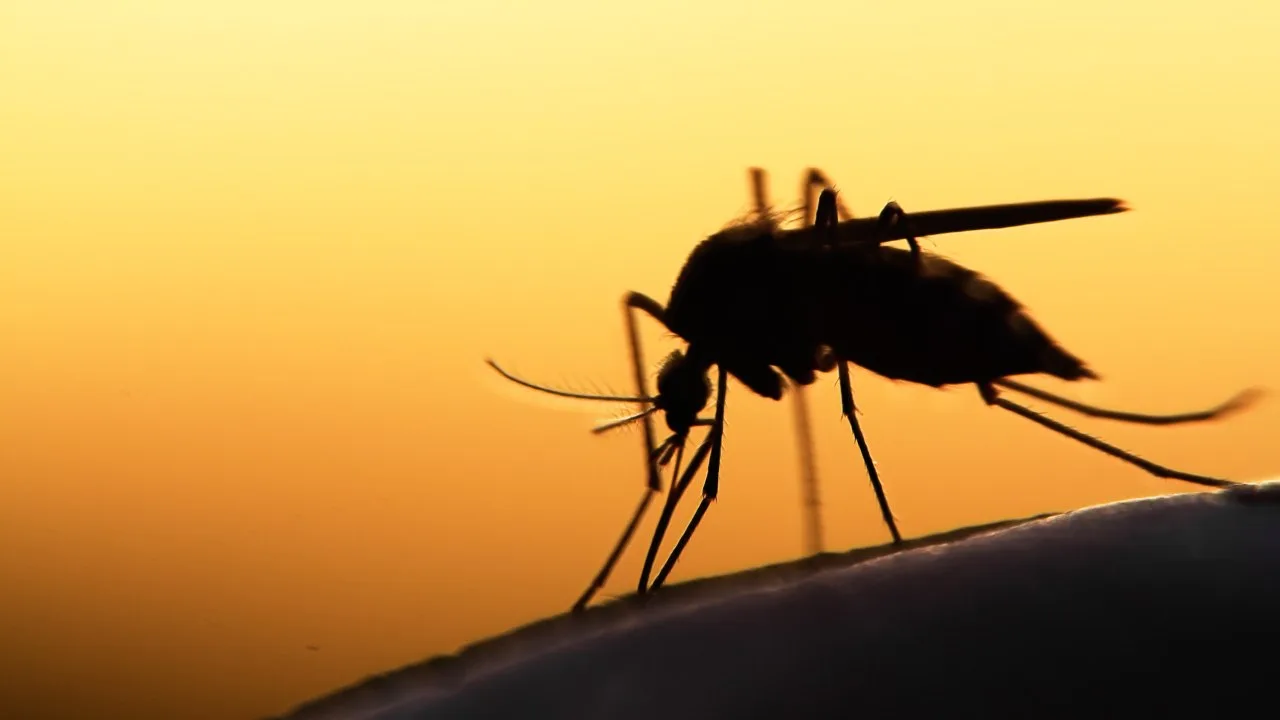
Enligt avtalet har ExpreS2ion rätt till en initial betalning samt milstolpsbetalningar motsvarande ett lågt ensiffrigt miljonbelopp i euro, tillsammans med royaltyintäkter på framtida nettoförsäljning i ett lågt till medelhögt ensiffrigt procentintervall. Samarbetet bygger vidare på ett tidigare term sheet och stärker parternas gemensamma ambition att accelerera den globala tillgången till innovativa malariavacciner.
– We are pleased to have executed the definitive agreement with Serum Institute of India, the world’s largest vaccine manufacturer, säger Frandsen. By combining ExpreS2ion’s innovative vaccine technology with Serum Institute of India’s unmatched development and manufacturing capabilities, we are well positioned to bring a much-needed malaria vaccine to populations at risk.
Ett fortsatt globalt hälsoproblem
Malaria är fortfarande en av världens mest dödliga sjukdomar. Enligt WHO:s World Malaria Report 2024 orsakade sjukdomen cirka 597 000 dödsfall under 2023, varav tre fjärdedelar var barn under fem år i Afrika. Sammanlagt rapporterades 263 miljoner fall av malaria globalt under samma år.
Blodstadieansats kan ge bredare skydd
ExpreS2ion Biotechs utveckling kretsar kring ExpreS2-plattformen – skapad för upptäckt, preklinisk utveckling och GMP-produktion av svårproducerade proteiner. Utöver huvudprojektet inom bröstcancer, ES2B-C001, består portföljen av kandidater mot influensa, malaria och nipahvirus. Förutom ES2B-C001 drivs samtliga projekt av externa partners, där antigenerna produceras med hjälp av ExpreS2-plattformen.
Sedan 2012 har ExpreS2ion samarbetat med professor Simon J. Draper vid University of Oxford kring flera malariavaccinprojekt, däribland RH5.1 och R78C. Båda vaccinerna bygger på ExpreS2ions egenutvecklade teknik, som fortfarande är den enda plattform som kan producera tillräckliga mängder aktivt antigen för pågående kliniska prövningar.
Till skillnad från nuvarande godkända vacciner som R21/Matrix-M och RTS,S/AS01 – vilka riktar in sig på parasitens leverstadium – är RH5.1 och R78C designade för att angripa blodstadiet i parasitens livscykel. En kombination av vacciner mot båda stadierna kan ge ett bredare och mer långvarigt skydd mot malaria, enligt forskare vid Oxford.
Stärker ExpreS2ions kommersiella position
ExpreS2-systemet har tidigare använts i utvecklingen av vacciner mot bland annat covid-19 och influensa. Det nya partnerskapet med Serum Institute of India förstärker bolagets kommersiella position inom global vaccinutveckling. Med stöd av den indiska läkemedeljättens omfattande tillverknings- och distributionsnätverk, som täcker över 170 länder, kan RH5.1- och R78C-programmen nu ta nästa steg mot storskalig produktion och global tillgänglighet.
Vd kommenterar
BioStock kontaktade ExpreS2ion Biotechs vd Bent U. Frandsen för att få veta mer.
What does this agreement with Serum Institute of India mean for ExpreS2ion’s long-term growth strategy?
– If Serum Institute of India, or SII, manages to develop these malaria vaccines to the market, it will potentially be significant for our long-term growth strategy. SII can further validate our platform technology, as well as potentially pave the way for wider application of using our unique S2 cells-based approach in development and manufacturing of vaccines against infectious diseases. Needless to say, this remains to be seen, but I am excited about being engaged with SII now.
When do you expect to see these vaccines on the market?
– It depends on SII’s manufacturing and process scale-up work on these two malaria products, as well as the development of large-scale clinical trials. I cannot provide you with expectations to market entry at this point, but of course I am confident that SII with their expertise and size can ensure that these important malaria vaccines eventually reach the market.
How do RH5.1 and R78C differentiate themselves scientifically from other malaria vaccines on the market?
– Now, I am not a scientist myself, but I can say that RTS,S/AS01 and R21/Matrix-M vaccines block malaria at the liver stage—neutralizing parasites right after a mosquito bite and stopping them from infecting liver cells. RH5.1 and R78C, which are also formulated with the Matrix-M adjuvant, act at the next stage, stopping parasites from multiplying within red blood cells—the major site of parasite expansion and disease. Stopping parasites at both stages further reduces illness and severity. RH5.1 is particularly promising, showing strong human immune responses so far.
– The major value proposition of RH5.1 and R78C is “complementarity”: it could be used in combination with (or subsequent to) e.g. the R21/Matrix-M vaccine to raise total efficacy, reduce breakthrough infections, reduce parasite burden and possibly transmission.
What role did ExpreS2ion’s proprietary ExpreS2 technology play in securing this partnership?
– Leading scientists at University of Oxford tried for many years to express the known malaria target protein RH5.1 in conventional production systems, based on mammalian cells, yeast, and other cell systems. ExpreS2ion’s founders met with these scientists and presented the advantages of ExpreS2ion’s S2 cell system, ExpreS2. And lo and behold, our platform did the trick, that ensured that these antigens could even be produced at all.
– Since then, University of Oxford has progressed these, and other malaria antigen targets, into clinical development; in fact University of Oxford current run ten different clinical trials in Phase I and Phase II on various malaria vaccines, that are all based on our ExpreS system. And it was two of these malaria target proteins, RH5.1 and R78C, that lately caught the interest of Serum Institute of India.
How will this collaboration with the world’s largest vaccine manufacturer influence the scalability and global reach of these programmes?
– Serum Institute of India is dedicated to providing affordable vaccines worldwide, and has presence in more than 170 countries, including the US, UK, and Europe. Furthermore, SII already is the manufacturer and distributor of R21/Matrix-M, which WHO in Q4 2023 recommended as the second malaria vaccine for children at risk of malaria caused by the Plasmodium falciparum mosquito. This is produced in yeast and was also initially clinically developed by University of Oxford.
– The first shipment of the R21/Matrix-M vaccines to Africa took place in Q2 2024, at which point SII had produced 25 million doses with a capacity to manufacture up to 100 million doses. I think this all bodes well for the scalability and global reach, that Serum Institute of India is capable of, also for RH5.1 and R78C.
Innehållet i BioStocks nyheter och analyser är oberoende men BioStocks verksamhet är i viss mån finansierad av bolag i branschen. Detta inlägg avser ett bolag som BioStock erhållit finansiering från.