Saniona har genomgått en tydlig vändning under det senaste året, drivet av två större licensavtal och stabila framsteg i den interna CNS-portföljen. Kombinationen av partnerintäkter och förberedelser inför kommande kliniska studier har förändrat bolagets position och gjort aktien till en av de mest framgångsrika inom bioteknik i Norden under 2025.
Betydligt förbättrad finansiell ställning
Nettoomsättningen under tredje kvartalet steg till 410,7 Mkr, jämfört med 7,2 Mkr samma period föregående år. Ökningen förklaras huvudsakligen av den initiala betalningen från Jazz Pharmaceuticals, som intäktsfördes i sin helhet under kvartalet. Det starka kassaflödet gav också bolaget en av dess starkaste likviditetspositioner hittills.
Denna betalning följer på den upfront som Saniona mottog från Acadia Pharmaceuticals i slutet av 2024. Tillsammans har avtalen genererat 70,5 miljoner USD i icke-utspädande kapital, med möjlighet till mer än 1,5 miljarder USD i framtida milstolpsbetalningar. Intresset från externa partners speglar det ökande läkemedelsintresset för selektiv modulering av jonkanaler.
Vid kvartalets slut uppgick kassan till 672,8 Mkr, vilket ger Saniona goda möjligheter att driva flera interna utvecklingsprogram vidare utan omedelbart behov av ytterligare finansiering. Den finansiella styrkan skapar både stabilitet i verksamheten och flexibilitet i strategiska beslut inför en period som väntas präglas av regulatoriska processer och möjliga kliniska studiestarter.
Intern forskning närmar sig klinisk fas
Under kvartalet fortsatte Sanionas interna utvecklingsprogram att avancera. Bolaget förbereder nu tre helägda projekt inför planerade fas I-studier 2026: SAN2219 mot epilepsi, SAN2465 mot egentlig depression och SAN2668 för svåra pediatriska epilepsier. Samtliga program baseras på robusta prekliniska data och stöds av nyligen inlämnade substanspatent som sträcker sig in på 2040-talet.
Ett viktigt framsteg var att SAN2668 utsågs till klinisk kandidat. Molekylens selektiva GABA-receptorprofil är utformad för att ge effektiv anfallskontroll samtidigt som riskerna för sedering och kognitiva bieffekter minimeras. De IND-förberedande aktiviteterna fortskrider enligt plan och programmet närmar sig sin första studie i människa.
Starkt positionerat i ett allt mer dynamiskt CNS-landskap
Det bredare CNS-området har fått förnyat intresse från både investerare och läkemedelsbolag, drivet av betydande medicinska behov och en rad affärer med höga värden inom neurologi och psykiatri. Sanionas strategi att kombinera intern utveckling med utvalda partnerskap ligger väl i linje med denna utveckling.
Samtidigt pågår regulatorisk granskning av tesofensin mot fetma i Mexiko genom partnern Medix, vilket kan öppna för en ny intäktsström. Utöver detta bidrar forskningssamarbetena med Boehringer Ingelheim, AstronauTx och Cephagenix till att bredda Sanionas vetenskapliga och kommersiella bas.
Vd kommenterar
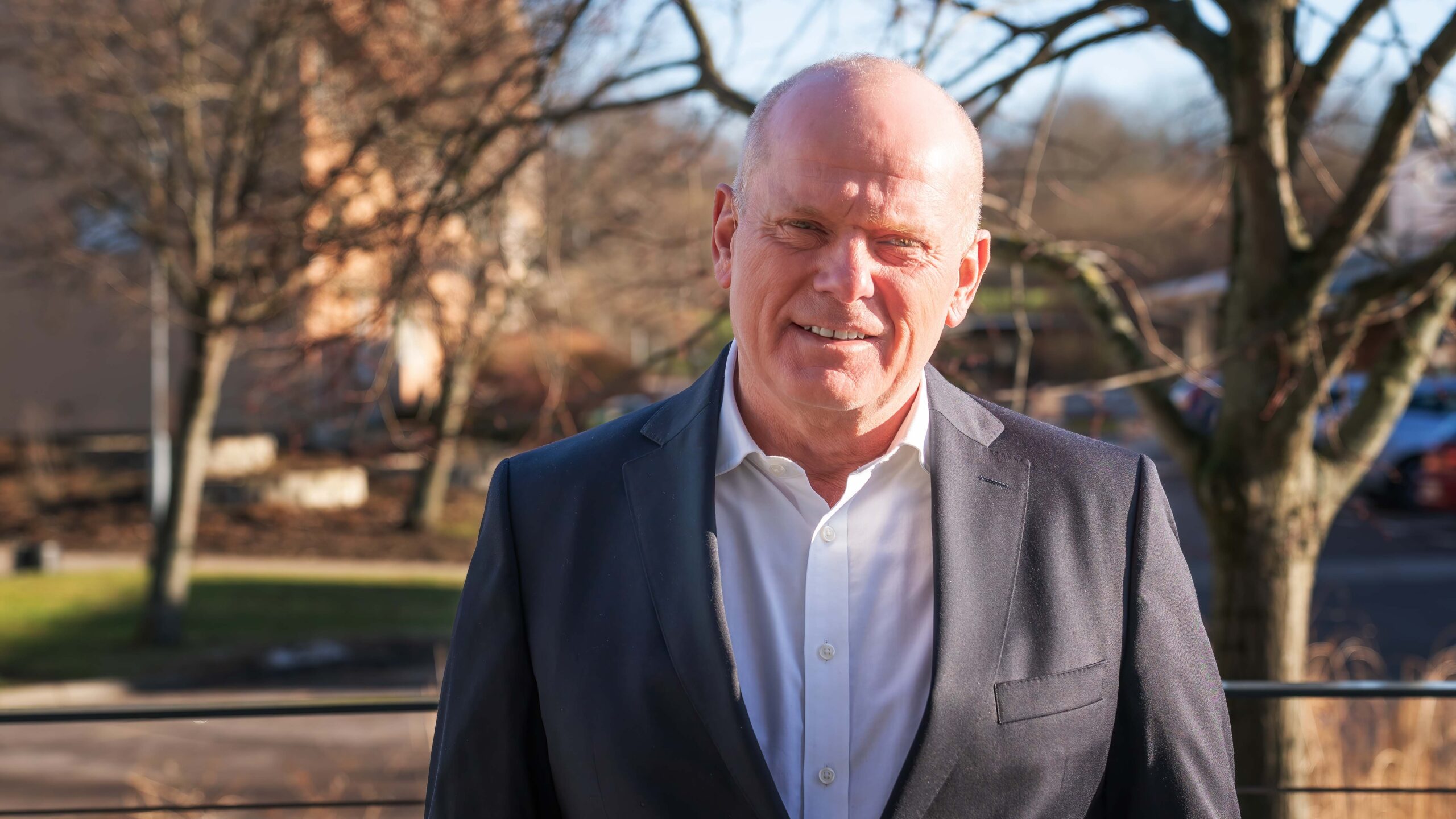
BioStock kontaktade vd Thomas Feldthus för att diskutera Sanionas utveckling det senaste året, den stärkta positionen efter de senaste partnerskapen och bolagets prioriteringar framöver.
How would you describe Saniona’s journey since the strategic refocus in 2022?
– In the summer of 2022, we developed a five-year plan consisting of three phases: (1) Turnaround, (2) First Financing (2-3 years), and (3) Long-Term Strategy. The Turnaround phase can be summarized in two words: focus and sacrifice. We operated in a “war-room” mode with weekly management meetings, strict financial discipline, and the establishment of fully funded research collaborations to secure both our platform and our employees, while implementing cost controls such as salary freezes. This phase took one year longer than initially planned, which forced us to execute a difficult rights issue in the winter of 2023/24. However, when the turnaround materialized, it was far more powerful than anticipated, enabling us to effectively bypass the First Financing phase altogether.
How does the agreement with Jazz Pharmaceuticals influence Saniona’s long-term development strategy and partnership approach?
– The agreements with Acadia and Jazz ensure the optimal development and commercialization of two highly promising assets. At the same time, they allow us to advance three equally valuable internal assets to proof-of-concept and to redeploy our drug discovery capacity into internal programs as our existing research collaborations conclude. This alignment of strategy, resources, and opportunity is both exciting and highly motivating for the entire Saniona team.
Among your three internal programs approaching IND-enabling completion, which candidate holds the strongest potential for early clinical value?
– All three Phase 1 programs will include biomarkers for target engagement as well as EEG readouts. Target engagement data will guide optimal dose selection, while EEG biomarkers provide functional readouts that support our differentiation thesis and serve as a mechanistic proof-of-concept. In addition, we are evaluating the potential benefits of generating early clinical proof-of-concept data shortly after Phase 1 completion.
CNS has become an increasingly active therapeutic area with several high-value acquisitions. How does this renewed interest affect Saniona’s positioning?
– We are well positioned to capitalize on this CNS renaissance. We possess both the scientific know-how and the financial resources to mature our internal assets to the point where we can establish a profile comparable to companies recently acquired at substantial valuations.
What is the strategic significance of the regulatory review of tesofensine in Mexico via Medix?
– A successful outcome would provide a stable income stream and may serve as a platform for developing our obesity franchise. However, it has no strategic relevance to our CNS focus, and we deliberately separate these activities from our core objectives.
How will you allocate capital across internal R&D, corporate development, and new initiatives in 2026?
– Our primary focus is advancing our three assets into Phase 1 trials. While we do have internal prioritization, it is not material at this stage. The programs are at similar maturity levels but face different technical challenges, which may influence the sequence in which they enter Phase 1. We will be satisfied if two Phase 1 studies begin in the second half of 2026 and the third in Q1 2027.
– Most of our research resources are currently committed to ongoing collaborations, and we intend to redirect them to internal programs as they become available. Our aim is to establish a balanced pipeline across clinical phases.
How do you view the potential for additional partnerships in support of long-term growth and shareholder value?
– Partnerships are central to our strategy. We have multiple assets and a validated discovery platform capable of generating new programs, which is essential for a partnership-oriented business model. Our goal is to prepare two internal assets for Phase 3 initiation while advancing others through partnerships or license agreements. Once we reach Phase 3 readiness, Saniona will be a fundamentally different company in terms of capabilities, infrastructure, external visibility, and financial strength. We intend to grow step by step while securing income and building momentum through partnerships.
Which milestones should investors follow most closely as Saniona enters its next development phase?
– The most important milestone in the coming year is delivering on our Phase 1 initiation timelines. In addition, we expect two clinical milestones with Jazz and Acadia, three research milestones with Boehringer Ingelheim, Cephagenix, and AstronauTx, and progress on one internal research milestone.
– On the BD front, we will seek partners for the programs positioned for partnering because they to not fit into our strategic focus within CNS. But we will also continue our BD activities on CNS assets, including the three internal development assets. I anticipate that we will license at least one of them before Phase 3 initiation, potentially earlier if the terms justify it.
– Over the past three years, we have secured four new collaborations, two in research and two in development. While we could continue that pace, I am cautious about 2026. With multiple internal initiatives and partner commitments underway, there is a real risk of resource bottlenecks, and I want to avoid overloading our teams with extensive due diligence and global BD engagements that might hinder progress on our internal programs and existing partnerships.
– Our research teams are fully occupied, and collaboration has proven valuable beyond financial contributions. Exposure to world-class scientists from other companies has strengthened our organization, and many of our researchers are now equipped with experience from both large pharma and biotech. If we wish to continue making new research collaborations, we will need to increase capacity to ensure bandwidth for our own programs.
– On the development side, our workload has surpassed existing capacity. We are now recruiting highly qualified personnel, and we are physically out of space—“packed like sardines,” as I sometimes say. This closeness supports integration, but it is unsustainable. We will refit part of our facility this spring to enable continued growth.
Innehållet i BioStocks nyheter och analyser är oberoende men BioStocks verksamhet är i viss mån finansierad av bolag i branschen. Detta inlägg avser ett bolag som BioStock erhållit finansiering från.