Sanionas utveckling under 2025 präglades av de strategiskt viktiga avtal som säkrades med Jazz Pharmaceuticals under 2025 och Acadia Pharmaceuticals under 2024. Tillsammans har dessa genererat 70,5 miljoner USD i upfront-betalningar. Partnerskapen har inte bara validerat bolagets plattform för upptäckt av jonkanaler, utan även etablerat en finansiell bas som gör att bolaget i stor utsträckning är självfinansierat.
Finansiell stabilitet och intäktstillväxt
Det finansiella resultatet för helåret 2025 speglar dessa framsteg. Intäkterna uppgick till 434,4 miljoner SEK, en kraftig ökning jämfört med de 334,7 miljoner SEK som rapporterades 2024. Tillväxten drevs främst av den upfront-betalning på 42,5 miljoner USD (404,8 miljoner SEK) som erhölls i samband med licensavtalet med Jazz Pharmaceuticals för SAN2355.
För helåret redovisade Saniona ett nettoresultat på 284,6 miljoner SEK. Av större vikt för den framtida operativa verksamheten är bolagets likvida medel – som per den 31 december 2025 uppgick till 580,8 miljoner SEK. Därmed går Saniona in i 2026 med de resurser som krävs för att finansiera sina ambitiösa interna utvecklingsplaner.
Fokus på egna kliniska tillgångar
Det främsta målet för 2026 är en disciplinerad exekvering av bolagets interna pipeline. Sanionas ambition är att inleda två fas I-studier under året och en tredje i början av 2027.
Huvudkandidaten SAN2668 utvecklas för svåra pediatriska epilepsier, däribland utvecklingsrelaterad och epileptisk encefalopati (DEE). Dessa tillstånd innebär stora medicinska behov då de ofta är resistenta mot läkemedelsbehandling. Regulatoriska ansökningar för SAN2668 planeras under andra halvåret 2026, med förväntad start av fas I-studier kort därefter.
Därutöver driver Saniona SAN2465, en potentiell first-in-class-behandling för egentlig depression (MDD). Bolaget har slutfört tillverkning av batcher för GLP-toxikologi och förbereder nu GMP-batcher för de första kliniska studierna på människa i USA. Den tredje nyckeltillgången, SAN2219, är inriktad på fokala anfall och befinner sig för närvarande i GLP-toxikologifas.
Milstolpepotential från partnerprogram
Även om det interna fokuset är tydligt innebär Sanionas partnerprogram fortsatta möjligheter till intäkter genom potentiella milstolpsbetalningar. Jazz Pharmaceuticals förbereder sig för att inleda kliniska fas I-studier med SAN2355, vilket kommer att utlösa en betalning till Saniona på 7,5 miljoner USD. Vidare planerar Acadia Pharmaceuticals en fas II-studie inom essentiell tremor för ACP-711 under 2026, vilket skulle resultera i en milstolpe på 10 miljoner USD.
Utöver den kliniska utvecklingen fortsätter den regulatoriska granskningen av tesofensine mot fetma i Mexiko via partnern Medix. Ett positivt besked där skulle generera royalties på försäljningen och därmed ge ytterligare ett icke-utspädande intäktsflöde.
Uppskalning för klinisk exekvering
För att svara mot den ökade aktiviteten i pipelinen expanderade Saniona sin organisation och ledningsgrupp under 2025. Antalet anställda ökade från 22 till 34, med specifik förstärkning av expertis inom klinisk utveckling, translationell medicin, toxikologi och CMC.
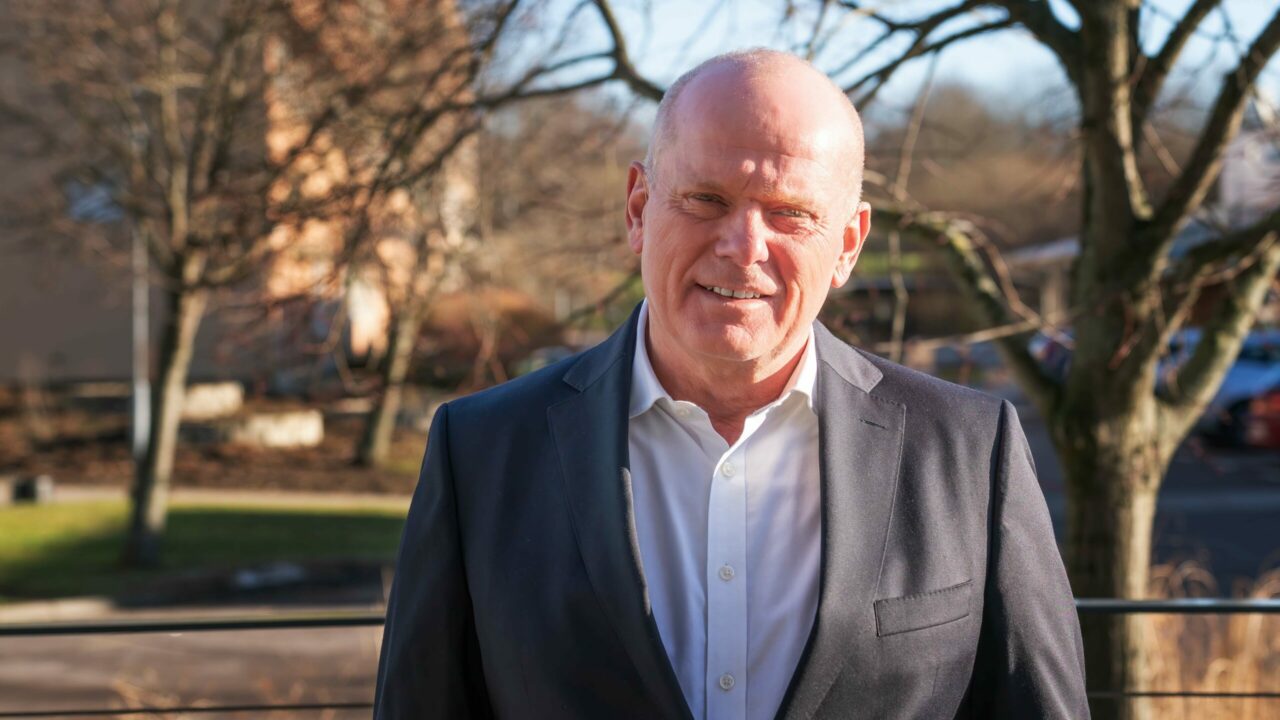
Vd Thomas Feldthus sammanfattade bolagets position i rapporten:
– För att matcha ambitionen i vår pipeline har vi under 2025 förstärkt vårt ledarskapsteam och våra operativa kapaciteter inom klinisk utveckling, translationell medicin, toxikologi och CMC. Med en stark finansiell grund, en tydlig strategi och ett team dimensionerat för nästa genomförandefas står Saniona mycket väl positionerat för att skapa meningsfullt värde för patienter och aktieägare.
Q&A med vd
Thomas, how would you summarize the significance of 2025 for Saniona’s long-term strategy?
– 2025 was the year we transitioned from being primarily a discovery and partnership-driven organization to becoming a clinical-stage development company with strategic optionality.
– We strengthened the balance sheet, validated our platform through two high-quality partnerships, and prioritized three differentiated internal programs. Importantly, we built the operational infrastructure required to run parallel clinical programs. So strategically, 2025 was about laying the financial, scientific, and organizational foundation that allows us to control our own clinical destiny over the next several years.
How do you ensure that the agile discovery culture of the research team is maintained as the company’s gravity shifts towards a clinical-stage organization?
– Our ion-channel expertise and entrepreneurial discovery culture remain core to Saniona’s identity. Even as we scale into clinical development, discovery remains a strategic pillar – not a legacy function. We maintain a lean, empowered research structure and continue to build a balanced pipeline across discovery, preclinical, and clinical stages.
– We deliberately separate discovery governance from clinical governance to ensure that scientific creativity is not constrained by clinical trial procedures. At the same time, we keep translational scientists integrated across both areas, so clinical insights continuously inform research decisions.
– In short, we are expanding our clinical capabilities while protecting the scientific agility that drives long-term value.
With 25,000 proprietary compounds in your IONBASE, how do you manage the selection process to ensure you are not missing potential blockbusters while focusing resources on the three lead assets?
– Our IONBASE is a strategic asset, but it is not a catalogue of potential blockbusters. That said, it does happen that we have gone through the database and found a potential new drug candidate. However, in general our selection process is hypothesis-driven, not inventory-driven.
– Thus, when initiating a research program around a new ion channel target and therapeutic concept, we apply a multi-layered decision framework that evaluates biological validation, mechanistic strength, differentiation to standards of care, clinical feasibility, probability of technical success, commercial attractiveness, competitive landscape, risk etc. Once selected, we develop a suitable assay for high throughput screening allowing us to screen hundred of thousands of compounds for such target. This is where the IONBASE demonstrate its value. We often obtain 80% of our hits from the IONBASE. Moreover, each compound may have hundred of data points. Using these hits and related data we can start building new chemical series for the target which ultimately may lead to a new drug candidate.
You have stated an ambition to take at least one program to phase III internally. What criteria will determine which asset is kept in-house versus partnered?
– Saniona is a small biotech company with limited infrastructure and financial capacity. Today, SAN2668 is the clearest candidate for internal development due to its rare-disease positioning and more defined development framework. However, we will ultimately let clinical data guide the decision.
How does your partnership strategy change if a major player offers a pre-emptive deal for one of your lead clinical candidates before you reach phase II proof-of-concept?
– If a pre-emptive proposal reflects fair value for the stage of development and risk profile, we will evaluate it seriously. However, our default strategy is to generate Phase 1 data and, where feasible, Phase 2 proof-of-concept before considering major transactions because that is typically where value inflects most meaningfully. The strength of our current financial position is that we are not forced to transact prematurely.
Innehållet i BioStocks nyheter och analyser är oberoende men BioStocks verksamhet är i viss mån finansierad av bolag i branschen. Detta inlägg avser ett bolag som BioStock erhållit finansiering från.